

Where the key lands: giving the little things at home their place
The evening starts at the door. Where keys, post and phone should land, and which leather tray suits which spot in your home.
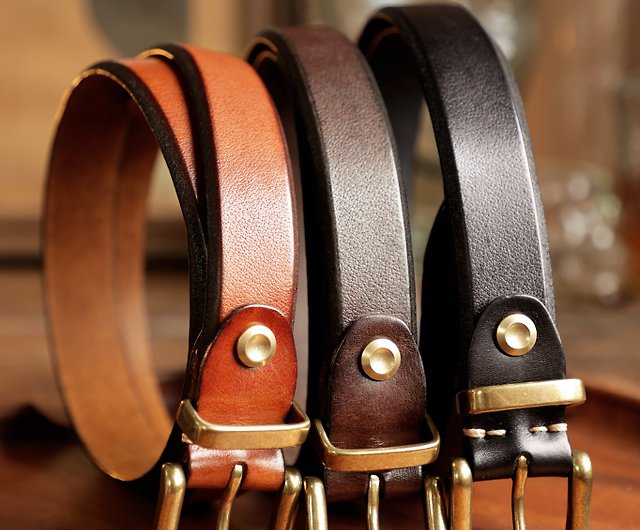
Gone are the days when some things were the privilege of a chosen few. Leather belts, once worn only by the upper classes, are now within everyone’s reach. The story of this versatile and truly indispensable accessory began in antiquity. Today the belt is an essential part of formal dress and an accessory worn with jeans, trousers, skirts and dresses. So how did the story of the belt begin, and what was it like in different eras?
According to Wikipedia, the story of the belt began with a linen rope. In ancient Egypt, upper-class men, or more precisely the pharaohs and their retinue, used such a rope to fasten a linen cloth called a “shenti” around their hips.
When technology was still undeveloped there wasn’t much choice: belts were sewn either from thin leather or from dense fabric. As the buckle had not yet been invented, belts were simply tied in a knot. As culture developed, buckles of bone or metal appeared. Loincloths with a kind of belt were worn by the ancient Cycladic peoples of the Greek peninsula. Many historians claim that Viking and barbarian tribes invented the belt for practical reasons, to hold up their trousers. In ancient Greece and Rome, crocodile skin was highly prized, so these belts weren’t hidden but worn over the chiton or peplos worn by men and women alike. People in China also wore belts over their robes, and Celtic women decorated their dresses with belts.
In myths, the belt is essentially a channel for all kinds of extraordinary abilities. It gives its owner supernatural powers or special charisma and makes it possible to carry out set tasks. The Greek goddess of love, Aphrodite, for example, received the belt “Charis” from her husband Hephaestus. He made it entirely of gold and covered it with diamonds. Charis was not only very beautiful but also highly effective, giving its wearer irresistible charm and erotic appeal.
During the Bronze Age and the Iron Age that followed, belts were mainly made of linked metal discs or chain links fastened with hooks. The buckle, later used on belts, mostly had other uses. The softly flowing clothes of antiquity were not meant to be laced. The exceptions were military belts such as the soldier’s balteus and the officer’s cingulum. The chest and hip bands women used to arrange their clothing were made of soft leather or fabric and had no buckles.
Men and women in the Middle Ages wore belts often. Belts became narrow and simple and were worn on the hips, with purses, amulets, pendants and weapons attached. Special women’s belts were invented for chastity, worn by married women and fastened with a special lock. The husband took the key with him when he went on long journeys. Belts became more complex and popular after the Crusades of the 13th century. By then the belt was both a necessary item of clothing and a fashion accessory, so it was richly and interestingly decorated.
Today the belt is mostly a decorative part of the wardrobe. Modern trousers fit perfectly well without one, so its function matters less than its looks. A belt now lets you show your individuality. A well-chosen belt brings out your style and flatters your figure. Belts are made from many materials, which makes them affordable: textiles, rubber, leather, mixed materials or synthetic leather. There are also expensive options, such as crocodile or python skin.
Belts come in different lengths, widths and colours. Men’s leather belts are usually restrained in colour, understated and simple. Women’s belts can be more casual, with all kinds of decoration. Buckles play an important part and can vary as you like. Ideally, you should have several kinds of belt in your wardrobe to complete your own look.
0 comments

